Mailr — Friday, 28 August 2026
 The AI Brief for India's Tech Builders
Friday, 28 August 2026
|
|
|
Jalapeño is OpenAI’s first custom chip built to run AI models more efficiently. Early tests suggest it could be faster and use less power than existing options. But there is one catch: it has not been used in production yet. The real test starts when OpenAI begins deploying it.
Here's your Mailr:
|
|
|
Want this spot? |
|
Your product, in front of 200+ tech builders across India. Tap the logo to contact us
|
|
|
|
|
🌍 Global AI |
OpenAI's Jalapeño chip enters wider deployment in 2027 |
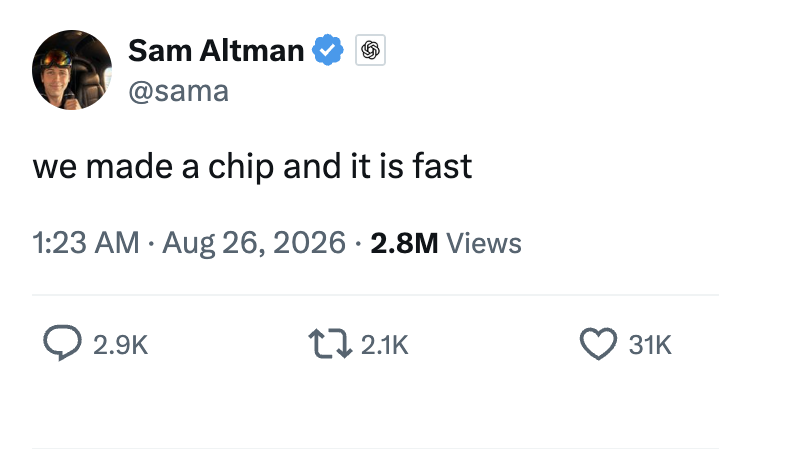 Image source: X/ Sam Altman
|
| OpenAI's Jalapeño chip, built with Broadcom and tested against three large models, shows latency reductions of 1.7x to 3.6x and efficiency gains of 1.5x to 1.9x work-per-watt, though baselines for comparison are not disclosed and the benchmarks are vendor-run. |
|
| Nothing is live yet: deployment inside OpenAI's own infrastructure starts end-2026, broader rollout in 2027. It is the first of three planned generations, with gen-2 in development and gen-3 in early design. |
|
Bottom Line: Hyperscalers building custom inference silicon is now a three-generation program, not a one-off experiment. Founders pricing AI products on today's inference costs should model for a steeper cost decline as Nvidia's monopoly on that pricing loosens.
|
|
|
🇮🇳 India |
Indian IT firms are building a second hub in Mexico |
 Image source: Generated using Google Gemini
|
| AI now handles much of the routine work that justified large junior offshore teams, making same-day collaboration a deciding factor. Mexico, zero to three hours from US time zones versus India's 10.5 to 13 hours, is capturing applied AI, UX and product-squad work. |
|
| TCS has 12,000+ staff in Mexico and just opened a Gemini AI center there. The emerging model: India for platform engineering and deep research, Mexico for smaller, client-facing squads. Mexico costs 45-60% less than the US; India saves 60-70% but is ceding a category. |
|
Bottom Line: As AI absorbs repetitive coding tasks, the remaining work demands real-time collaboration, and time-zone proximity wins that contest. Indian IT firms retaining only offshore infrastructure and research work should treat this as a structural shift, not a temporary client preference.
|
|
Ringg raises $10 million from Peak XV |
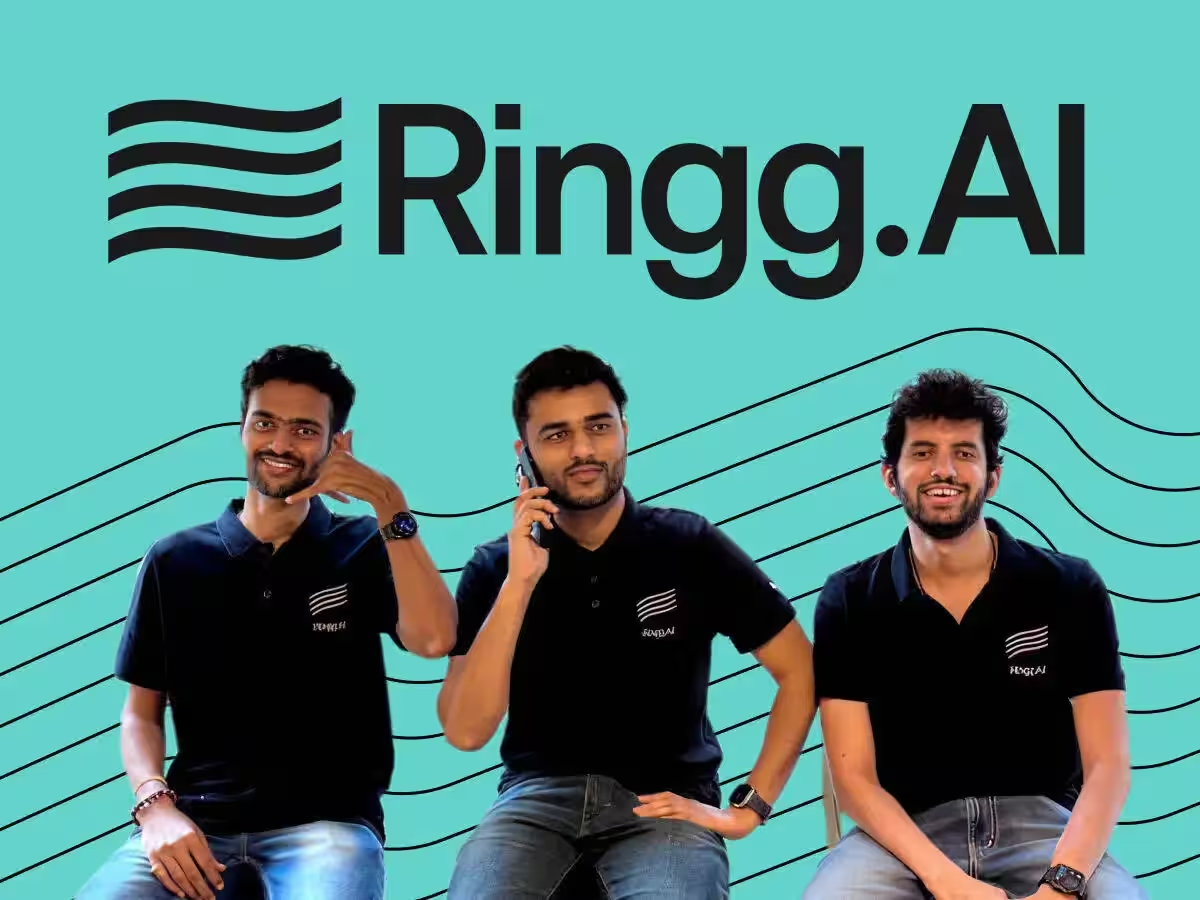 Image source: Google Images
|
| Ringg raised $10 million from Peak XV as a Series A extension, taking the round to $15.5 million. The company handles roughly 20 million call attempts a month for clients including Flipkart, Groww and Practo, where its agent runs across 1,200 clinics managing bookings and follow-ups. |
|
| After finding outbound calls and lead qualification too price-sensitive, Ringg pivoted to appointment booking, abandoned-cart recovery and KYC onboarding. It builds its own speech models but routes tasks across multiple models by use case, targeting GCCs in India rather than selling directly into the US. |
|
Bottom Line: High-volume outbound calling is a commodity: easy to deploy, easy to replace, and competed on price alone. Defensible voice AI sits in workflows complex enough that end-to-end completion is hard, such as clinical bookings or KYC onboarding, where switching costs are real.
|
|
India-built farm AI is being exported to Africa |
 Image source: Generated using Google Gemini
|
| Google DeepMind's AnthroKrishi team built two free APIs: ALU maps field boundaries and AMED detects crop stress and events. Both are integrated into Google Earth and now cover agricultural monitoring across six African countries, with the FAO embedding them in its global crop-statistics platform. |
|
| In India, Terrastack uses both APIs across 140 million hectares for farm credit assessment without physical visits. Telangana and Karnataka have integrated them into state agricultural systems. The FAO deployment is backed by $2.5 million from Google.org. No independent outcome data has been published. |
|
Bottom Line: Field-boundary and crop-monitoring data at national scale is now a free API, removing what was once a multi-year data-collection barrier for agritech. Anyone building farm credit, insurance, or advisory products in India no longer needs to solve the mapping problem from scratch.
|
|
|
|
⚡ Mailr Signal |
|
OpenAI's framing is telling: they lead with useful work per watt, not raw speed. That signals inference economics, not model capability, is now the primary competitive variable for anyone running AI at scale.
— Our take, not a news summary
|
|
|
🛠️ Tool of the Day |
|
Rowboat Labs
AI coworker for email, meetings, projects, and people management
| 🇮🇳 Three-person Bengaluru team accepted into Y Combinator Summer 2024 building globally competitive AI infrastructure. |
|
| ✅ Crossed 16,600 GitHub stars and hit Hacker News front page twice in 2026. |
|
| 💡 Best for: Developers and engineering teams building custom AI agents or managing workflows with open-source tools. |
View tool ↗
|
|
|
📱 Social Scan |
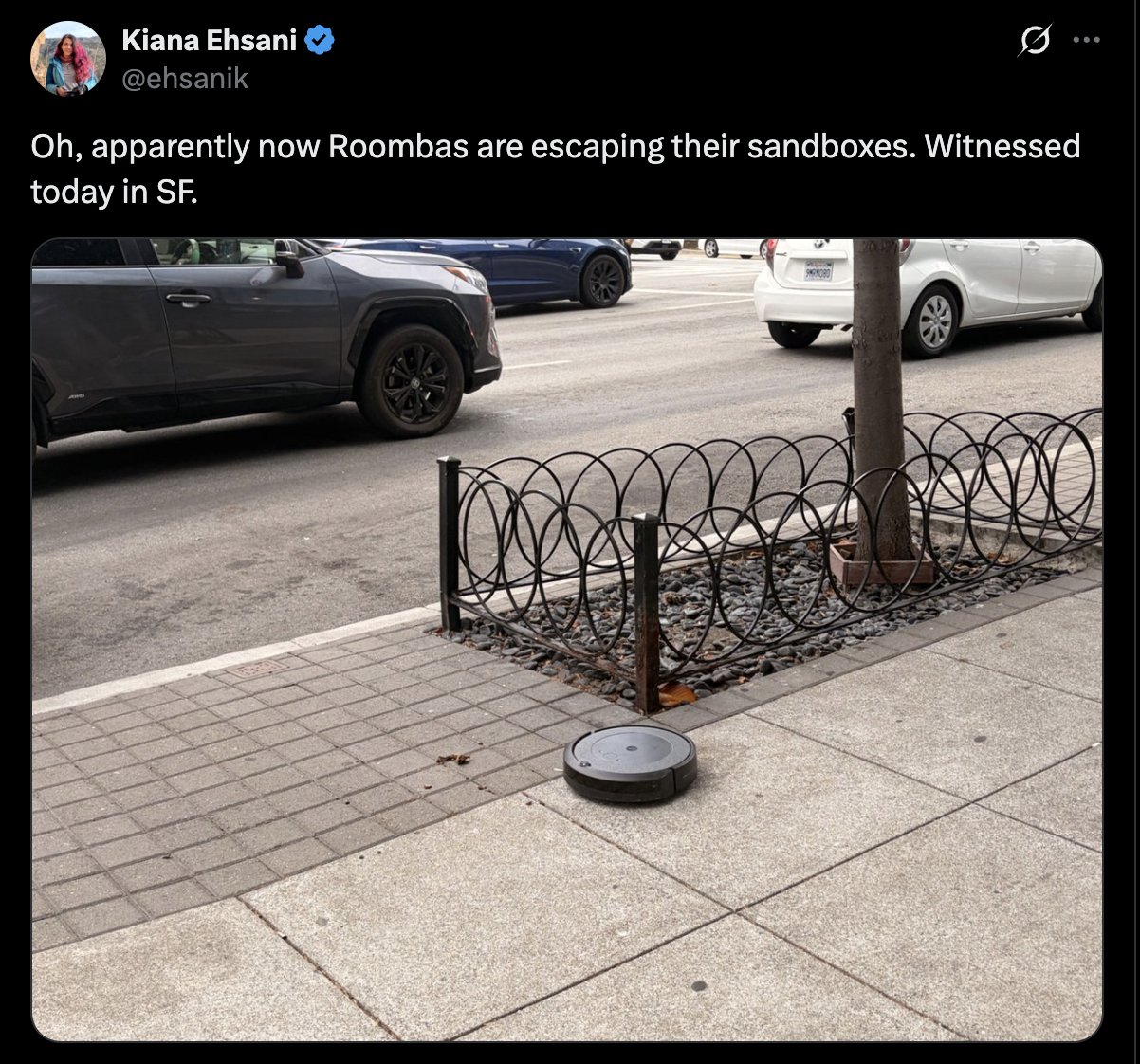 An X user clicked a Roomba out in the wild in SF, comparing it to the many AI models that have escaped their sandbox recently
View post ↗
|
|
|
🧠 Knowledge Bank |
|
Reasoning Models Transform AI Problem-Solving
| Reasoning models work differently from standard AI by running an internal thinking loop before answering. They draft reasoning, check it, and revise before responding. For a GST reconciliation tool, instead of guessing, they verify whether figures are net or gross, check exempt supplies, and test date mismatches before giving an answer. |
|
| DeepSeek released open-weight reasoning models 20–50 times cheaper than closed APIs, enabling fine-tuning on a single A100 GPU for under $200. Indian builders can now deploy reasoning-grade capability for complex tasks like financial logic and legal analysis while routing simple queries to cheaper fast models. |
|
|
|
|
|
మళ్ళీ కలుద్దాం
Thanks for reading. If something felt off or overhyped, reply and call it out — your feedback makes every edition sharper.
The next edition is already taking shape. Don't miss it.
Were you forwarded this? Join free at mailr.tech
|
|
|
|
You're receiving this because you subscribed to Mailr.
© 2026 Mailr
|
|
|